OUR CURRICULUM

Learning That Opens Doors

A broad, aspirational and therapeutic curriculum designed around individual starting points, individual needs and positive future destinations.

Every Learner Starts Somewhere Different

so, our curriculum starts with the learner.

Learners arrive at The Bridge at different stages of their educational journey. Some have experienced disrupted education, gaps in learning, anxiety or difficulties accessing a conventional classroom. Others may need a period of targeted support before returning to their home provision or moving on to their next destination.

Our curriculum combines academic learning, therapeutic support, personal development and opportunities to build the confidence and skills needed for life beyond The Bridge.

Progress Doesn't Look the Same for Everyone

We recognise that learners may join us with different academic abilities, emotional needs and levels of readiness for learning. Our curriculum is therefore flexible enough to meet learners where they are, while remaining ambitious about where they can go next.

Intent. Implementation. Impact.

Our curriculum is carefully planned to combine academic progress with the social, emotional and developmental support learners need to access education successfully.

01
INTENT

Where We Want to Go

Every learner has the right to access learning that is challenging, engaging, appropriate and meaningful. We aim to reconnect learners with education, address gaps in knowledge and prepare them for the next stage of their journey.

02
IMPLEMENTATION

How We Get There

Learning is adapted around individual need, informed by assessment and delivered through engaging lessons, enquiry, practical experiences and therapeutic approaches. PACE and adaptive teaching support learners to regulate, engage and make progress.

03
IMPACT

What Success Looks Like

Success includes academic progress, but reaches much further. We want learners to improve engagement, confidence, attendance, relationships, emotional regulation and aspirations so that they are better prepared for their next destination.

Our Curriculum Pillars

Not every learner arrives ready to access a classroom or formal academic learning. Our curriculum pillars allow us to support engagement at the right level while maintaining a clear pathway towards progress.

UNDERPINNING EVERY STAGE

Therapies & Interventions

Therapeutic support sits underneath the entire curriculum. Individual timetables can include targeted interventions that help learners develop regulation, communication, relationships, confidence and readiness for learning.

BUILDING TRUST

Engagement Steps

For learners who are not yet ready to access formal education. The focus is on building relationships, developing trust, increasing confidence and supporting the basic cognitive and emotional skills needed to begin engaging with learning.

LEARNING & PROGRESS

Progression Steps

Our core educational offer. Learners access core subjects in small groups, with teaching adapted to individual ability and need. Movement breaks, sensory tools, breakout spaces and individual staff support help learners remain engaged and successful.

BEYOND THE CLASSROOM

Steps for Life

A flexible pathway developing confidence, emotional literacy, independence and life skills. These skills form a golden thread throughout the curriculum and help prepare learners for successful transition to their next destination.

What Do Learners Study?

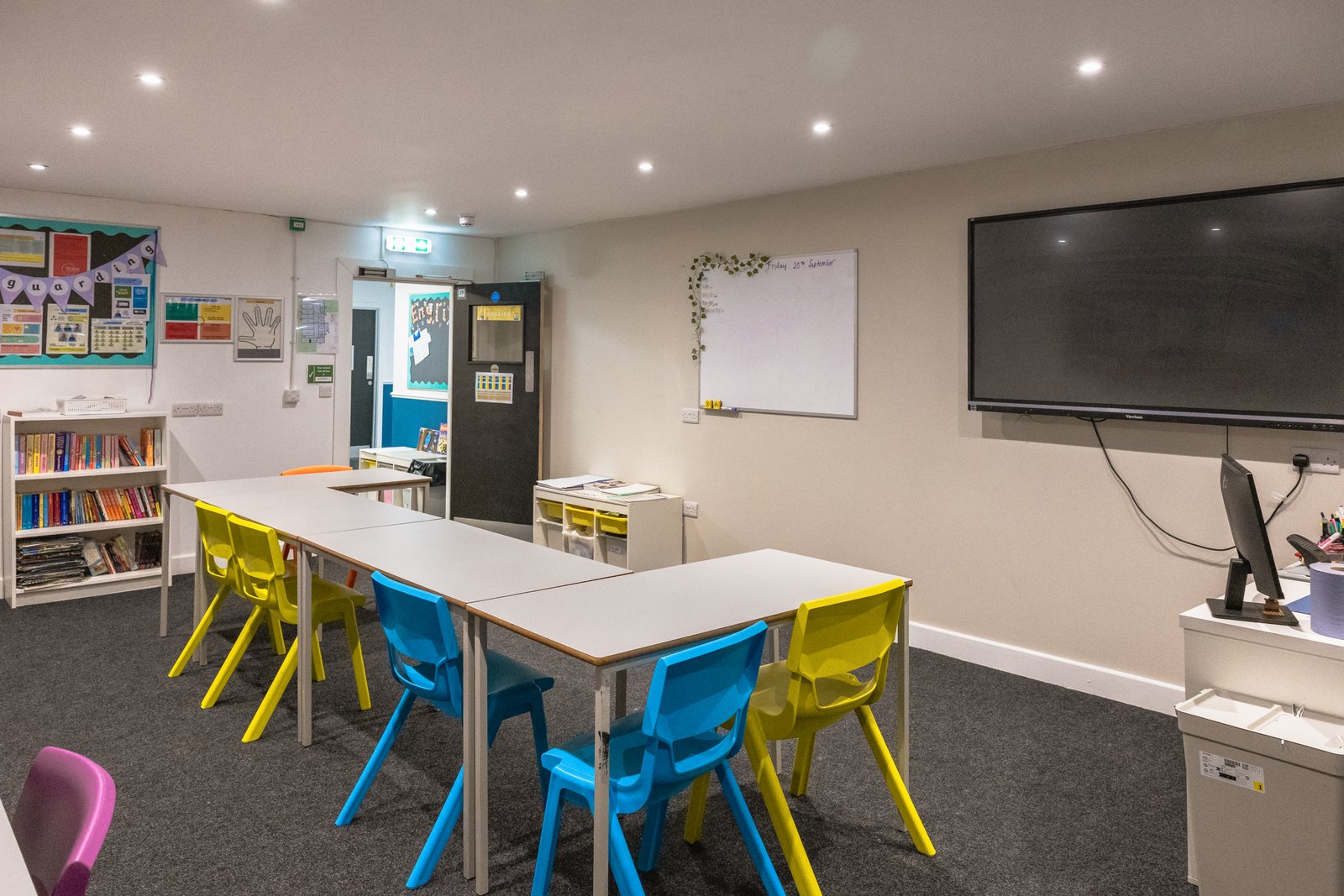
Learning is pitched appropriately to each learner's starting point while maintaining access to a broad range of curriculum areas.

English
Mathematics
Science
PSHE
Humanities Lower Phase
Geography/History Upper Phase
Art & Design
Physical Education
SMSC
Food
DIGITAL SKILLS

ICT skills are embedded throughout the curriculum rather than taught solely as a separate subject, giving learners opportunities to develop and apply digital skills across their learning.

Lower & Upper Phase

LOWER PHASE

Curiosity Through Enquiry

Lower Phase learners follow an enquiry-based curriculum designed to encourage investigation, questioning and curiosity.

An overarching enquiry provides a theme across the term, with individual lessons using key questions to help learners make connections across their learning.

Explore. Question. Discover.
UPPER PHASE

Progress Towards the Future

Upper Phase continues the investigative approach through key lesson questions, visual learning, practical and kinaesthetic experiences and learning matched to each learner's academic ability.

As learners move through the phase, the curriculum increasingly supports qualifications, independence and preparation for their next destination.

Develop. Challenge. Extend.

Building Confidence Through Reading

We want learners to develop enthusiasm and confidence as readers. Reading support is informed by baseline assessment so that learners can access material appropriate to their current level and make meaningful progress.

In Lower Phase, phonics assessment helps identify the right starting point for each learner, with trained staff delivering appropriate Twinkl Phonics support. Reading also forms part of everyday provision through guided reading, stories and shared class texts.

Our Therapeutic Curriculum

Feeling safe, understood and regulated creates the foundations for learning.

Many learners joining The Bridge have experienced disrupted education, trauma or unmet additional needs. Our therapeutic curriculum therefore sits alongside and within academic learning rather than being treated as something separate.

Our practice is trauma-informed and relationship-led, with PACE — Playfulness, Acceptance, Curiosity and Empathy — embedded into everyday interactions.
Emotional Regulation
Communication
Relationships
Self-Awareness
Confidence
Independence

Personalised Around the Learner

Assessment, EHCP outcomes, SEMH needs and information from families and referring professionals all help us understand how each learner can best access education.

01

Understand

We establish academic starting points, developmental needs, strengths, barriers and existing support requirements.

02

Adapt

Teaching strategies, resources, interventions and timetables are adapted around individual need.

03

Support

High levels of adult support, movement, sensory tools and appropriate spaces help learners access learning successfully.

04

Review

Academic, SEMH and individual targets are reviewed so that approaches can change as the learner develops.

More Than a Test Score

Understanding each learner's starting point is essential to planning effective learning. Baseline and ongoing assessment help us identify gaps, recognise strengths and ensure that teaching remains appropriately challenging.

Progress is considered across academic learning, engagement, wellbeing, behaviour, attendance, EHCP outcomes and social and emotional development.

WE MONITOR
  • Academic progress
  • Engagement with learning
  • SEMH development
  • EHCP targets
  • Attendance
  • Learner & parent voice

Qualifications & Accreditation

For learners working towards formal accreditation, our offer provides different pathways to recognise progress and achievement.

GCSE Academic qualifications
Functional Skills English & Mathematics
Entry Level Accessible progression
AQA UAS Unit Award Scheme
ASDAN Courses & accreditation
THE DESTINATION MATTERS

Preparing Learners for What Comes Next

Our aim is that every learner leaves The Bridge better equipped for the next stage of their journey — whether that means reintegration, another educational setting, post-16 education, training or employment.